
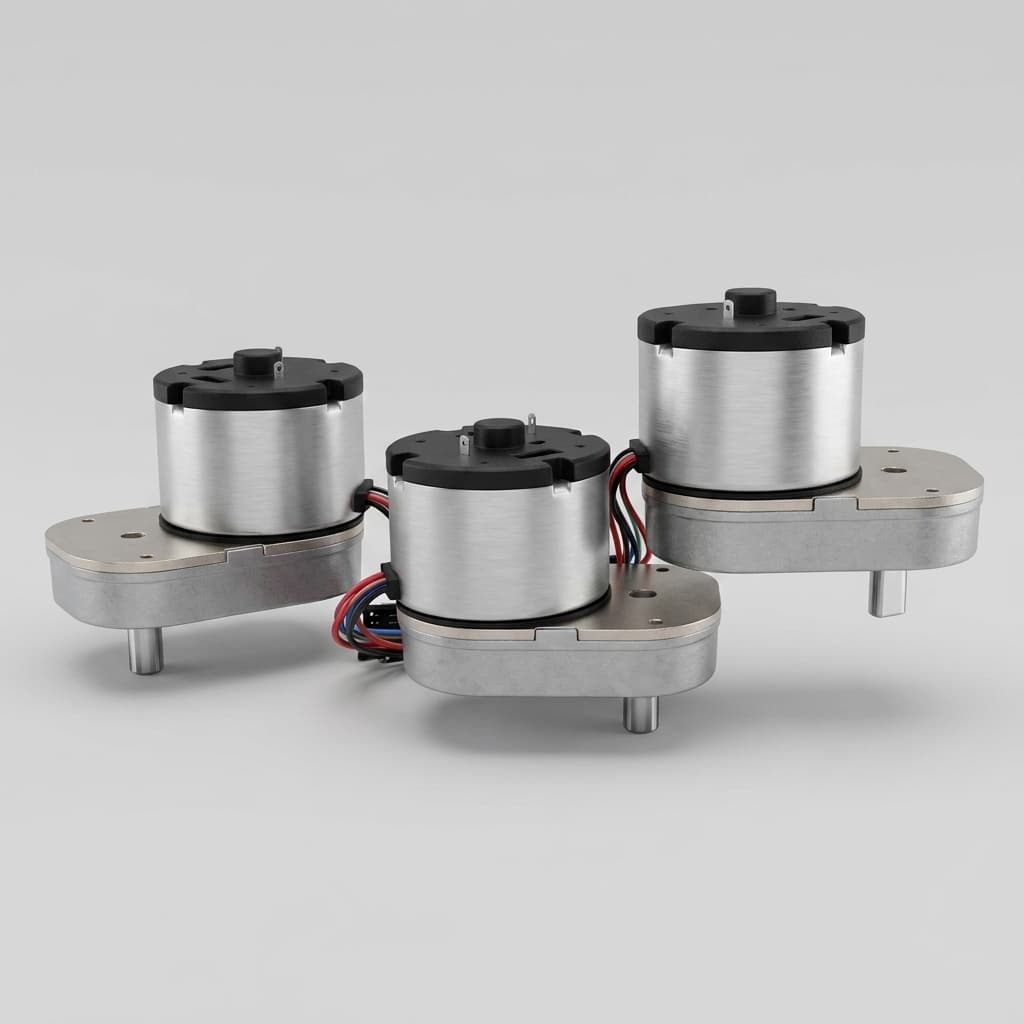
Overview
Collaborative robot (cobot) joint servo drives are engineered for human-safe shared workspace operation where smooth low-speed motion, minimal torque ripple, dual-loop encoder feedback, and hardware safety interfaces take priority over raw peak power. Unlike industrial servo drives optimized for speed and throughput, cobot drives must deliver precise torque control at speeds below 0.5 rad/s without cogging, vibration, or audible switching noise that would alarm human operators working in close proximity. The dual-encoder architecture — with both motor-side and output-side absolute position feedback — is essential for cobot joints because harmonic gear reducers introduce compliance and hysteresis that single-encoder systems cannot compensate for during force-controlled contact tasks. Safety integration is a non-negotiable requirement for collaborative robots entering production. Hardware-level Safe Torque Off (STO), Safe Brake Control (SBC), and controlled stop categories must be architecturally supported by the drive electronics, not just implemented in software. Buyers should confirm at the RFQ stage whether the quoted drive revision includes the specific safety interface hardware and firmware features needed for their target safety assessment, and request test records that demonstrate the safety function behavior under fault conditions. Our cobot joint drive platforms support dual-encoder processing, configurable current limiting, and brake control interfaces, with quality documentation packages designed to support supplier qualification audits from cobot OEMs pursuing CE marking and ISO 10218 compliance.