
Overview
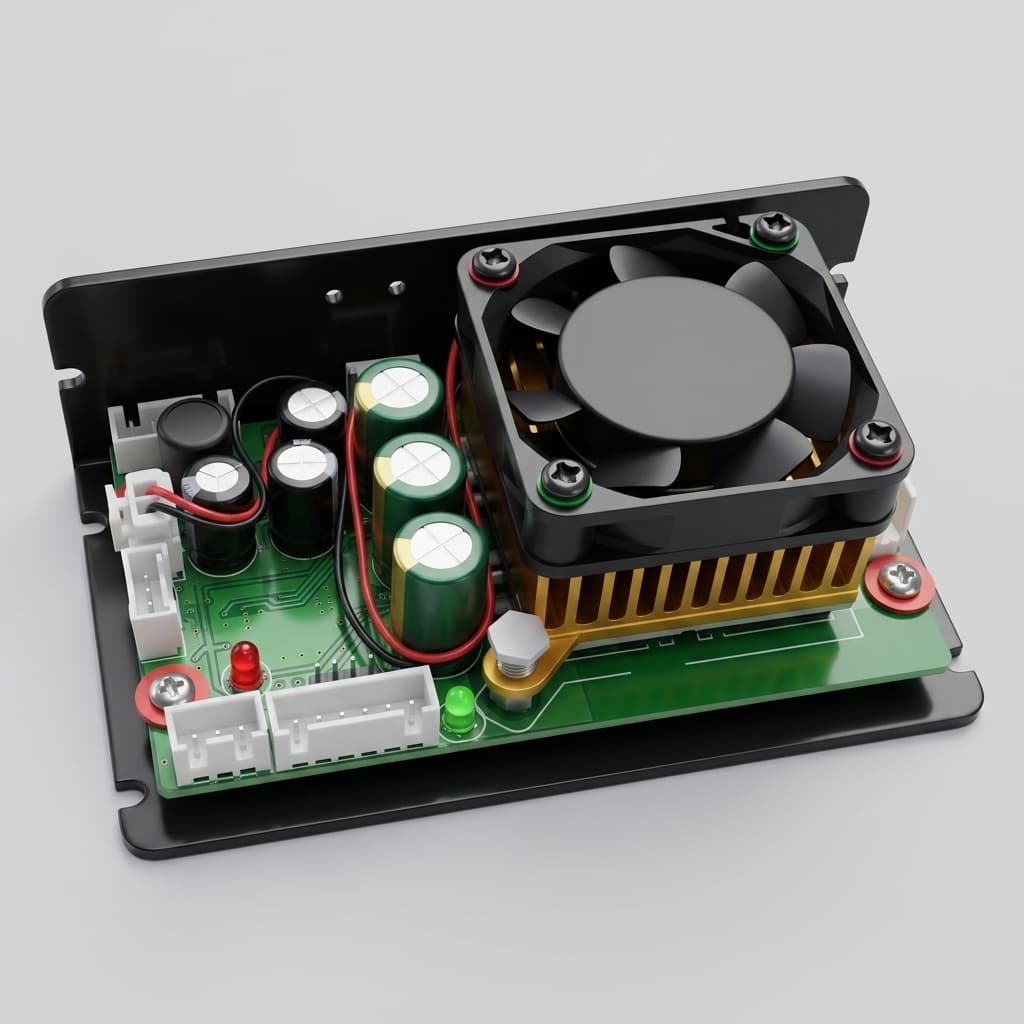
GaN (Gallium Nitride) low-voltage servo drives represent a fundamental shift in compact robotics motion electronics. Unlike traditional Silicon MOSFET-based servo drives that operate efficiently at higher voltages, GaN FET inverters are specifically engineered for the 24V to 60V DC voltage range that battery-powered robots, humanoid actuators, and autonomous mobile platforms demand. The core advantage of GaN switching technology is its ability to operate at significantly higher switching frequencies — typically 40 kHz to 100 kHz — while maintaining lower switching losses than equivalent silicon devices. This translates directly into two measurable benefits for robotics OEMs: reduced heat generation inside thermally constrained joint housings, and smoother current waveforms for low-inductance frameless torque motors that are sensitive to commutation noise. However, buyers should approach GaN servo drive selection with engineering rigor rather than marketing assumptions. The real-world efficiency gain depends heavily on the specific motor winding, duty cycle, cooling boundary, and board layout. A GaN drive that tests well on an open bench may still overheat when potted inside a sealed robot joint running a high-duty walking gait. For this reason, our engineering review process starts with the buyer's actual thermal boundary conditions — housing material, contact area, ambient temperature range, peak current duration, and sealed volume — before recommending a specific GaN power stage configuration. This page is designed for robotics OEM engineers who need to evaluate whether a compact GaN servo drive architecture can meet their joint module's electrical, thermal, and mechanical constraints before committing to a prototype sample order.