
Discuss EtherCAT/CAN FD requirements, sample availability, and lead-time assumptions.

GaN Servo Drives LogoGaN Servo Drives
Request RFQ
GaN Servo Drives LogoGaN Servo Drives

High-performance GaN servo drives and motion electronics manufactured in Shenzhen & Dongguan.

Inquiry Email

[email protected]

Email app

Include voltage, current, motor, encoder, protocol, board envelope, and quantity stage.

Instant Chat

+86 18857971991

Chat on WhatsApp

Direct response from our engineering team.

Products
  • GaN Low-Voltage Servo Drives
  • 48V Servo Driver Board
  • Driver-Encoder Integrated Servo Board
  • Robot Joint Servo Drive
  • EtherCAT 48V Servo Drive
  • CAN FD Servo Drive
Solutions
  • Humanoid Robot Joints
  • Collaborative Robot (Cobot) Joints
  • AMR and Mobile Robot Servo Drives
  • Exoskeleton and Prosthetics Servo Drives
  • GaN Servo Drive Selection Guide
  • EtherCAT & CAN FD Integration
OEM Capabilities
  • OEM Robot Joint BOM & Customization
  • Rigorous Compliance & Quality Control
  • Deep OEM Custom Solutions
  • Engineering File Request Center & CAD Resources
Resources
  • Blog
  • Factory
  • Contact / RFQ
  • Privacy Policy
  • Cookie Policy
  • Terms of Service
© 2026 GaN Servo Drives. All Rights Reserved.|Backed by Linkup Ai Co., Ltd. Manufacturing delivered by the Advanced Manufacturing Division of Linkup Precision.|Legal entity: Linkup Ai Co., Ltd.
← Back to Applications

Humanoid Robot Joints

Ultra-compact, high-torque density drive solutions optimized for humanoid leg and arm kinematics.

Target Buyer:Advanced robotics research and commercial humanoid OEMs.
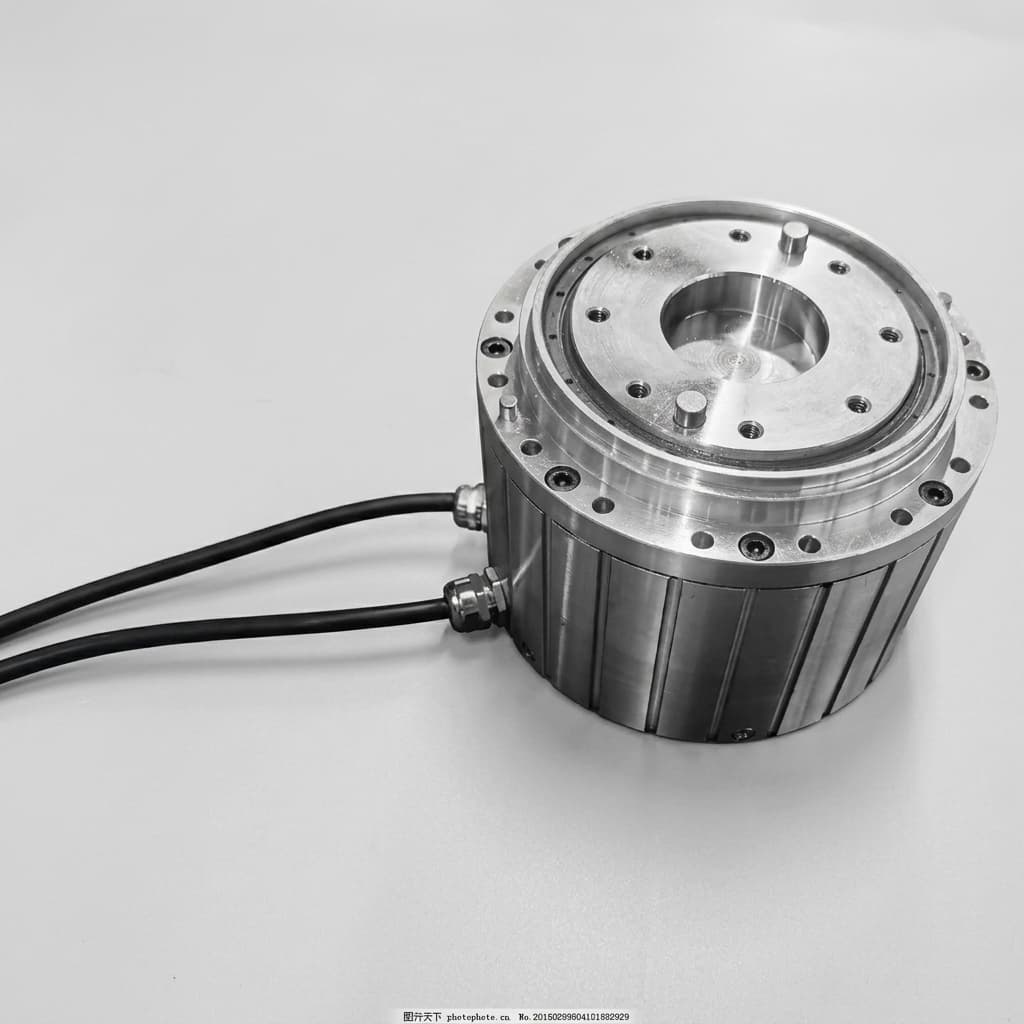
Humanoid robot joint actuator module with planetary reducer and integrated servo drive for bipedal locomotion

Overview

Humanoid robot joint actuators face the most demanding combination of constraints in compact robotics: extreme peak torque requirements for dynamic locomotion, severe thermal limitations in sealed joint cavities, strict weight budgets that affect whole-body balance, and the need for deterministic multi-axis synchronization across 20 or more degrees of freedom. Each joint axis on a humanoid robot — hip, knee, ankle, shoulder, elbow, wrist, and torso — presents a different torque-speed-thermal envelope that must be individually sized rather than sourced from a single common actuator. For example, a humanoid hip joint during walking generates peak torques 5 to 10 times higher than the continuous rating, with transient events lasting only 50 to 200 milliseconds during ground impact absorption, while a wrist joint requires smooth low-speed precision with minimal torque ripple for manipulation tasks. The communication architecture for humanoid robots typically demands EtherCAT with sub-millisecond cycle times for synchronized leg control during dynamic balancing, though some teams use CAN FD for upper-body joints where the synchronization requirements are less strict. A common procurement mistake in humanoid joint programs is treating the actuator as a commodity purchase rather than a system integration project. The drive board, frameless motor, encoder, harmonic reducer, brake, and housing must be validated as an integrated stack — not just as individual components — because thermal coupling, mechanical resonance, and electromagnetic interference between subsystems can cause failures that never appear when testing components in isolation.

Application Highlights

  • High peak torque for jumping/walking
  • Minimal form factor
  • Low latency communication

Common Use Cases

  • Bipedal Robots
  • Humanoid Upper Body

Implementation Focus

  • High impact load tolerance
  • Rapid current response

Specification Snapshot

Use these buyer-side parameters to decide whether this page matches your architecture before starting a formal quotation thread.

ParameterTypical DirectionBuyer Note
Target axesHip, knee, ankle, shoulder, elbow, wrist, and torso jointsDifferent joints need different peak-current and thermal margins; avoid one-size-fits-all sourcing.
Key constraintPeak torque, sealed-joint heat, cable routing, and synchronizationShare gait, impact, and balance-control assumptions for meaningful drive selection.
Recommended networkEtherCAT for high-DOF sync; CAN FD for distributed cost controlControls architecture should be locked before actuator electronics are quoted.

Selection Logic Before RFQ

Use this flow to decide whether the page is a practical match before comparing unit price or sample lead time.

CheckpointDecision InputBuyer Action
1. Confirm buyer fitAdvanced robotics research and commercial humanoid OEMs.Use this page when the project involves Bipedal Robots, Humanoid Upper Body.
2. Define operating windowTarget axes: Hip, knee, ankle, shoulder, elbow, wrist, and torso jointsDifferent joints need different peak-current and thermal margins; avoid one-size-fits-all sourcing.
3. Lock integration constraintsKey constraint: Peak torque, sealed-joint heat, cable routing, and synchronizationConvert High impact load tolerance, Rapid current response into measurable RFQ values before asking for final pricing.
4. Gate sample approvalAxis-by-axis drive selection worksheet and Sample validation plan for walking and impact eventsRequest this evidence with the sample or pilot quote so acceptance criteria are clear before PO.

Buyer Decision Notes

  • Start with joint-level torque and thermal maps, then choose drive board or complete joint sourcing.
  • Validate regeneration and braking behavior early because humanoid legs produce large transient events.
  • Ask whether firmware and connector strategy can scale across multiple joint sizes.

Factory & Delivery Capability

  • Drive electronics, frameless motor, encoder, reducer, brake, and harness sourcing for humanoid joint BOMs.
  • Variant planning across upper-body, leg, and ankle actuator sizes.
  • Prototype and pilot support for robot startups moving from lab validation to build slots.

Application Evaluation Matrix

Evaluation MetricTypical RangeWhy It Matters
Power-to-WeightAxis-specific calculationCrucial for dynamic balancing and must be calculated from torque, mass, and duty-cycle data.

RFQ Preparation Checklist

  1. Peak torque duration
  2. Weight constraints
  3. Impact absorption requirements

Risk and Mitigation

  • Impact damage: Robust current limiting and mechanical isolation.

Validation Evidence to Request

EvidenceWhy It Matters
Axis-by-axis drive selection worksheetHelps engineering and procurement compare torque, current, voltage, and thermal margin by joint.
Sample validation plan for walking and impact eventsPrevents a bench-stable drive from failing during dynamic robot testing.

Production, QC, and Delivery Flow

Treat the flow below as a minimum evidence path from inquiry to pilot release. It keeps engineering, quality, and purchasing aligned before a repeat order.

StageWhat to CheckEvidence / Output
1. Axis duty mapPeak torque duration, Weight constraints, Impact absorption requirementsApplication-level current, torque, voltage, thermal, and communication assumptions.
2. Architecture fitHigh impact load tolerance, Rapid current responseDecision on board-level drive, driver-encoder stack, or complete joint sourcing path.
3. Scenario validationAxis-by-axis drive selection worksheetHelps engineering and procurement compare torque, current, voltage, and thermal margin by joint.
4. Pilot feedback loopFirmware baseline, connector notes, and field-test findingsRevision-controlled changes before repeat build or fleet deployment.

RFQ Starter

For humanoid joint sourcing, send axis list, rated and peak torque, motion duty, bus voltage, protocol, board envelope or joint envelope, and prototype timeline.

Open Contact / RFQ Checklist

Buyer FAQ

Do you support impedance control?

Yes, via high-bandwidth current loop and fast EtherCAT/CAN FD.

What data should we send for Humanoid Robot Joints?

For humanoid joint sourcing, send axis list, rated and peak torque, motion duty, bus voltage, protocol, board envelope or joint envelope, and prototype timeline.

How should Humanoid Robot Joints be validated before pilot build?

Request Axis-by-axis drive selection worksheet. Helps engineering and procurement compare torque, current, voltage, and thermal margin by joint.

When is Humanoid Robot Joints the right page to review?

Start with the real axis duty cycle, then size voltage, current, torque, thermal path, feedback, and network architecture around that duty. A good first screen is target axes: Hip, knee, ankle, shoulder, elbow, wrist, and torso joints.

Recommended Next Pages

  • Robot joint servo drive
  • EtherCAT 48V servo drive
  • OEM robot joint BOM
  • Contact / RFQ

Inquiry Email

[email protected]

Email app

Include voltage, current, motor, encoder, protocol, board envelope, and quantity stage.

Instant Chat

+86 18857971991

Chat on WhatsApp

Direct response from our engineering team.