
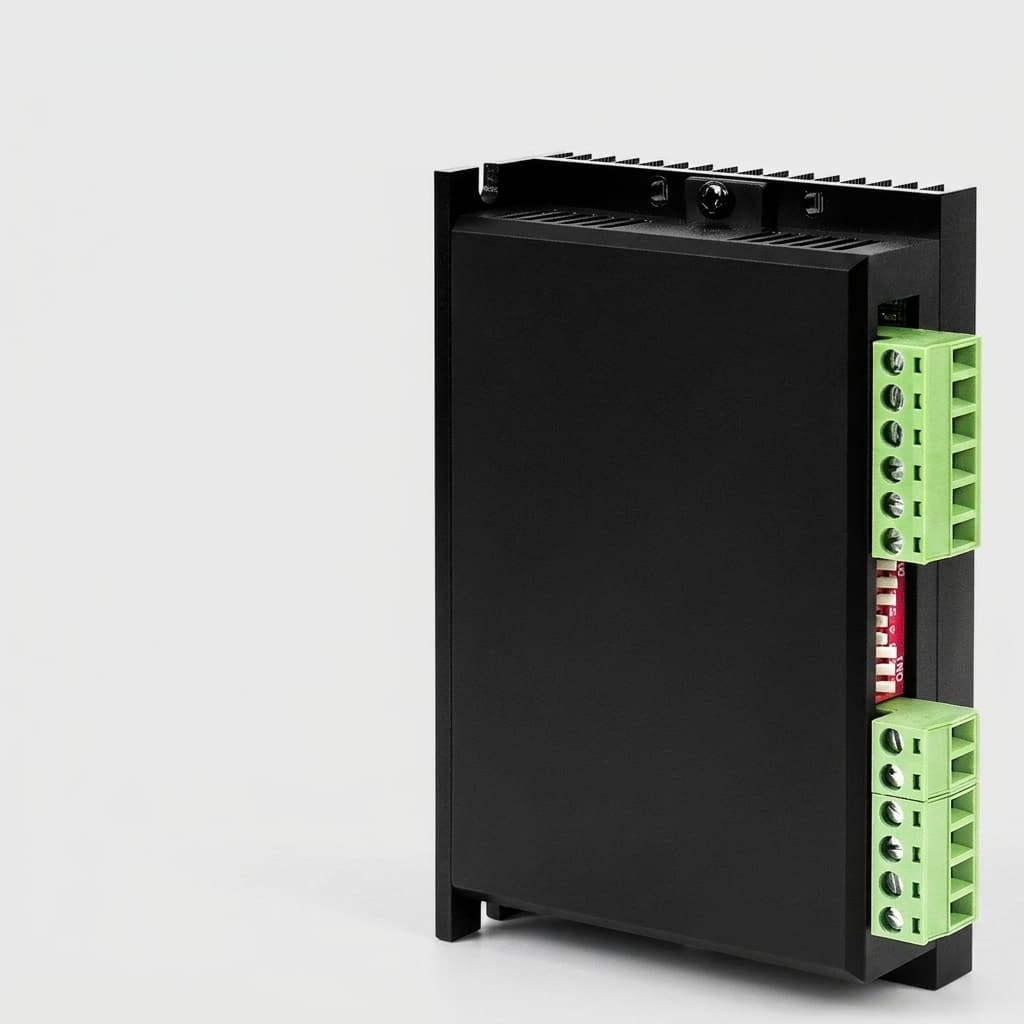
Evaluating Monolithic 3-Phase GaN Servo Micromodules: 2026 Procurement & Engineering Guide
A 2026 engineering and procurement guide to monolithic 3-phase GaN servo micromodules, thermal limits, supplier risk, sourcing checklist, and fit for compact robotics.
As the robotics industry accelerates toward highly untethered, compact form factors—such as autonomous mobile robots (AMRs), humanoid platforms, and surgical manipulators—the constraints on actuator joints have reached a critical threshold. In 2026, many compact actuator programs are evaluating a shift in power electronics design: the migration from discrete Gallium Nitride (GaN) HEMTs to integrated 3-phase GaN servo micromodules.
Executive Summary & Reader Value:
- The Shift: Integrating gate drivers, protection circuits, and 3-phase GaN power stages compresses the power stage from six FETs plus drivers/passives into a millimeter-scale package, lowering parasitic inductance and layout risk.
- Supply Chain Impact: The 2025/2026 move toward 300mm GaN-on-Si manufacturing improves die-per-wafer economics, but it does not remove proprietary package and lifecycle risk.
- Design Boundary: While monolithic modules simplify the BOM and layout, they concentrate heat in a smaller physical footprint, making advanced housing-as-heatsink (R_th) thermal paths mandatory.
- Recommendation: Procurement teams should prioritize vendors offering pre-validated thermal models and integrated functional safety (STO SIL 2/PL d) to avoid hidden integration costs.
Scope note, updated July 3, 2026: This guide is for global OEM teams sourcing low-voltage, battery-powered robotic joint drives in the 24V - 100V class. It is not a datasheet substitute; final selection still depends on the motor winding data, peak-current window, housing thermal path, communication stack, safety assessment, and vendor lifecycle guarantees.
1. The Evolution of GaN Integration: From Discrete to Monolithic
For the past several years, early adopters of GaN in sub-100V servo drives relied on discrete High Electron Mobility Transistors (HEMTs). While discrete GaN eliminated reverse-recovery losses and enabled high-frequency (40kHz - 100kHz) PWM switching, it placed a heavy burden on the PCB designer. At high switching speeds ($dV/dt$), even millimeters of trace length introduce parasitic inductance. This stray inductance can cause severe gate ringing, voltage overshoot, and electromagnetic interference (EMI), forcing engineers to compromise on switching speeds and defeating the primary advantage of wide-bandgap materials.
The 2026 design direction for high-density robotic joints is the integrated 3-phase GaN micromodule. In this architecture, the low-voltage logic, gate drivers, bootstrap circuits, level shifters, and the GaN power switches themselves are co-packaged or fabricated on the same die/package family. By keeping the critical gate loop inside the package boundary, parasitic inductance is sharply reduced. This allows the GaN switches to run at higher PWM frequencies with less external layout burden, simplifying PCB design and reducing the need for bulky passive snubber components.
For engineering teams, this means a significantly faster time-to-market. For procurement, it means consolidating 15-20 individual discrete components (FETs, separate driver ICs, passives) into a single Line Item on the Bill of Materials (BOM), streamlining inventory management and reducing pick-and-place assembly costs.
2. Engineering Boundaries & Thermal Management
The paradox of shrinking power components is that while power density increases, so does thermal density. In a 10A - 20A RMS-class joint drive, a module no larger than a postage stamp can still generate concentrated heat that must be aggressively managed. In an unventilated robotic joint, the ambient air provides little useful cooling; heat must be conducted outward through the module's exposed pad directly into the robot's mechanical chassis.
The Thermal Paradox
When comparing a discrete array to an integrated module, the discrete array spreads the heat sources across a larger PCB area. The integrated module concentrates them. Therefore, while switching losses (P_sw) can be lower due to optimized gate driving, the junction-to-case thermal resistance (R_th_j-c) becomes the bottleneck. If the OEM cannot guarantee a high-quality thermal interface material (TIM) and a flat metallic mating surface on the robot housing, the module can quickly hit its package-specific junction limit and trigger over-temperature protection.
Visual Reference: Transitioning from discrete PCB layouts (where trace length dictates parasitic inductance and switching risk) to a monolithic module where driver and FETs share the same substrate.
3. Supply Chain Dynamics & The 300mm Wafer Shift
From a procurement perspective, earlier generations of GaN devices were manufactured on 150mm (6-inch) or 200mm (8-inch) wafers. This constrained supply and kept unit costs significantly higher than mature Silicon MOSFETs. By late 2025 and 2026, leading suppliers had demonstrated or advanced GaN-on-Si manufacturing on 300mm (12-inch) wafers.
This is a profound inflection point. 300mm production can increase die-per-wafer output by roughly 2.3x compared to 200mm, changing the long-term economics of integrated GaN power stages.
For supply chain leaders, this means:
- Better Die Economics: The price delta between a premium Silicon-based drive and a GaN-based integrated drive can shrink as wafer scale improves, especially when mechanical cost savings are counted.
- Capacity Upside, Not a Guarantee: Broader wafer capacity can reduce allocation risk, but proprietary packaging and qualification status still decide whether a second source is realistic.
- Supplier Consolidation: Purchasing a pre-tested, encapsulated 3-phase module shifts yield risk and testing burden away from the servo OEM and back to the silicon vendor or Tier-1 drive manufacturer.
However, dual-sourcing remains a challenge. Because monolithic modules from different vendors (e.g., EPC, Infineon, Navitas) have proprietary pinouts and packaging, they are rarely drop-in replacements for one another. Procurement teams must negotiate long-term supply agreements (LTAs) and lifecycle guarantees before committing to a specific footprint.
4. Structural Comparison: Discrete GaN vs. Monolithic 3-Phase Modules
To aid in the architectural decision, the following table benchmarks standard discrete GaN implementations against 2026 monolithic micromodules across key procurement and engineering vectors.
| Evaluation Metric | Discrete GaN HEMTs (Array of 6) | Monolithic 3-Phase Module | Business & Engineering Impact |
|---|---|---|---|
| BOM Line Items (Power Stage) | 15 - 25 (FETs, Drivers, Passives) | 1 | Drastic reduction in procurement overhead and SMT placement costs. |
| Parasitic Gate Inductance | Highly dependent on PCB layout (2nH - 8nH) | Near Zero (< 0.5nH) | Monolithic eliminates layout risk, allowing safer 100kHz+ switching. |
| PCB Footprint Requirement | Medium to Large (Spread out) | Ultra-Compact package-level integration | Enables drives to fit inside hollow-shaft frameless motors. |
| Thermal Interface (TIM) Mgmt | Complex (Requires planarizing multiple FETs) | Simplified (Single exposed thermal pad) | Reduces assembly defects; improves predictable thermal transfer. |
| Fault Protection (OCP/OTP) | External shunts and analog circuitry required | Often integrated on-die | Faster short-circuit response times; higher system reliability. |
| Component Lead Times (2026) | Stable (Multiple generic passives/drivers) | Requires strategic vendor alignment | Proprietary module footprints demand secure LTAs. |
| Total Cost of Ownership (TCO) | Higher hidden costs (Yield, Assembly, EMI tuning) | Lower overall system cost | Premium component cost offset by mechanical and assembly savings. |
5. The OEM Buyer's Guide & Procurement Checklist
When sourcing GaN-based servo drives built on monolithic architectures, buyers must evaluate potential partners beyond just nominal current ratings. Use this checklist to validate a supplier:
- Thermal Validation Data: Does the supplier provide detailed R_th data and simulated derating curves for unventilated, conduction-cooled environments? Never accept "open air" continuous current ratings for a robotic joint application.
- Functional Safety (STO) Integration: Are safety features like Safe Torque Off (STO to SIL 2 or PL d) integrated alongside the micromodule? External safety relays consume space and defeat the purpose of the GaN footprint reduction.
- Firmware Competency: High-frequency GaN drives require specialized firmware (e.g., very tight dead-time compensation, high-bandwidth current loops). Does the supplier offer field-proven firmware for ultra-low inductance frameless motors?
- EMI/EMC Pre-compliance: Fast switching $dV/dt$ causes severe EMI. Ask the supplier for their CISPR 11 / EN 61800-3 test reports. Have they optimized the layout to contain the noise, or will it pollute the robot's internal CAN/EtherCAT networks?
- Supply Chain Transparency: What is the underlying silicon vendor for their monolithic module? Have they secured allocation on 300mm wafer lines, and what is their End-of-Life (EOL) policy?
If your RFQ is still at architecture stage, first compare the standard GaN Low-Voltage Servo Drive envelope against your motor current, encoder, protocol, and thermal boundary before requesting a custom package.
6. Applications & Boundary Conditions
Where Monolithic GaN Excels: Monolithic GaN servo micromodules are uniquely suited for battery-powered, space-constrained, low-voltage (24V - 60V) applications.
- Humanoid Robotics: High joint density, strict weight limits, and requirement for high-bandwidth torque control to maintain dynamic balance.
- Surgical Robotics: Need for absolute precision, zero audible noise (ultrasonic PWM frequencies >20kHz), and compact tool-center points.
- Advanced AGVs/AMRs: High peak current capability for overcoming static friction, packaged directly inside the wheel hub.
Where to Avoid:
- High-Voltage Industrial Grid (400V+): The selection case is more nuanced at AC mains voltage. SiC modules, IGBTs, and high-voltage GaN each require a separate efficiency, short-circuit, isolation, and cost review.
- High-Inductance, Low-Speed Motors: If the motor possesses high phase inductance and the application does not demand fast dynamic response, the cost premium of GaN provides diminishing returns compared to legacy Silicon MOSFETs.
7. FAQ & Common Procurement Hurdles
Q1: If monolithic GaN modules are proprietary, how do we mitigate supply chain risk? A: Avoid designing the bare module onto your own PCBs unless you have massive scale. Instead, procure the complete servo drive from a specialized Tier-1 vendor who manages the silicon supply chain and provides a standardized mechanical envelope and communication protocol (e.g., EtherCAT/CANopen). This abstracts the silicon risk away from the OEM.
Q2: Do we still need large DC bus capacitors with GaN modules? A: Yes, but they are smaller. While the high PWM frequency reduces the current ripple and shrinks the required capacitance, the high peak currents drawn by the motor during rapid acceleration still require local DC-link energy storage. You will transition from bulky electrolytic capacitors to compact, highly reliable ceramic (MLCC) arrays.
Q3: Can monolithic GaN modules handle short-circuits as well as legacy Silicon? A: GaN HEMTs are extremely fast, which means they can fail very quickly during a short circuit. This is why integrated modules are preferred when the vendor includes ultra-fast overcurrent protection (OCP), fault signaling, or driver-level protection close to the power devices—much faster than a loosely routed external discrete protection circuit could manage.
Q4: How does the transition to GaN impact our existing motor selection? A: GaN drives perfectly complement next-generation low-inductance frameless motors. If you pair a high-frequency GaN drive with an older, high-inductance motor, you may see marginal efficiency gains. Upgrading the drive and the motor together maximizes system power density.
8. Sources & References
To validate these claims, procurement and engineering teams should consult these specific references, checked July 3, 2026:
- Infineon 300mm Power GaN Manufacturing: Documents the 300mm GaN wafer milestone and the approximate 2.3x die-per-wafer economics versus 200mm production. Source: Infineon 300mm GaN update
- EPC33110 100V 3-Phase ePower Stage: Shows a 100V 3-phase GaN power stage with three half-bridges, integrated gate drivers, bootstraps, and level shifters in a 6.5mm x 6mm package. Source: EPC33110 product page
- EPC Integrated 3-Phase BLDC Robotics Inverter: Provides a 2026 robotics-focused example of an integrated GaN power stage with onboard control, sensing, and communication in a compact 32mm circular design. Source: EPC robotics inverter announcement
- TI TIDA-00909 Low-Voltage GaN Inverter Reference Design: Supports the 40kHz - 100kHz switching-frequency boundary for low-voltage, high-speed, low-inductance BLDC motor drives. Source: TI TIDA-00909 reference design
Conclusion & Next Steps
Sourcing monolithic GaN micromodule-based servo drives is a strategic lever for robotics OEMs in 2026. By navigating the thermal boundary conditions and asking the right questions about functional safety and EMI compliance, buyers can secure a massive competitive advantage in actuator power density.
Ready to bypass the discrete layout risks and scale your robotics production? Review our engineered GaN Servo Drive Lineup featuring state-of-the-art monolithic integration and pre-certified STO. For integration support, contact our procurement specialists to request 3D step files, thermal derating data, and Custom OEM evaluation boards.
Author

Categories
More Posts
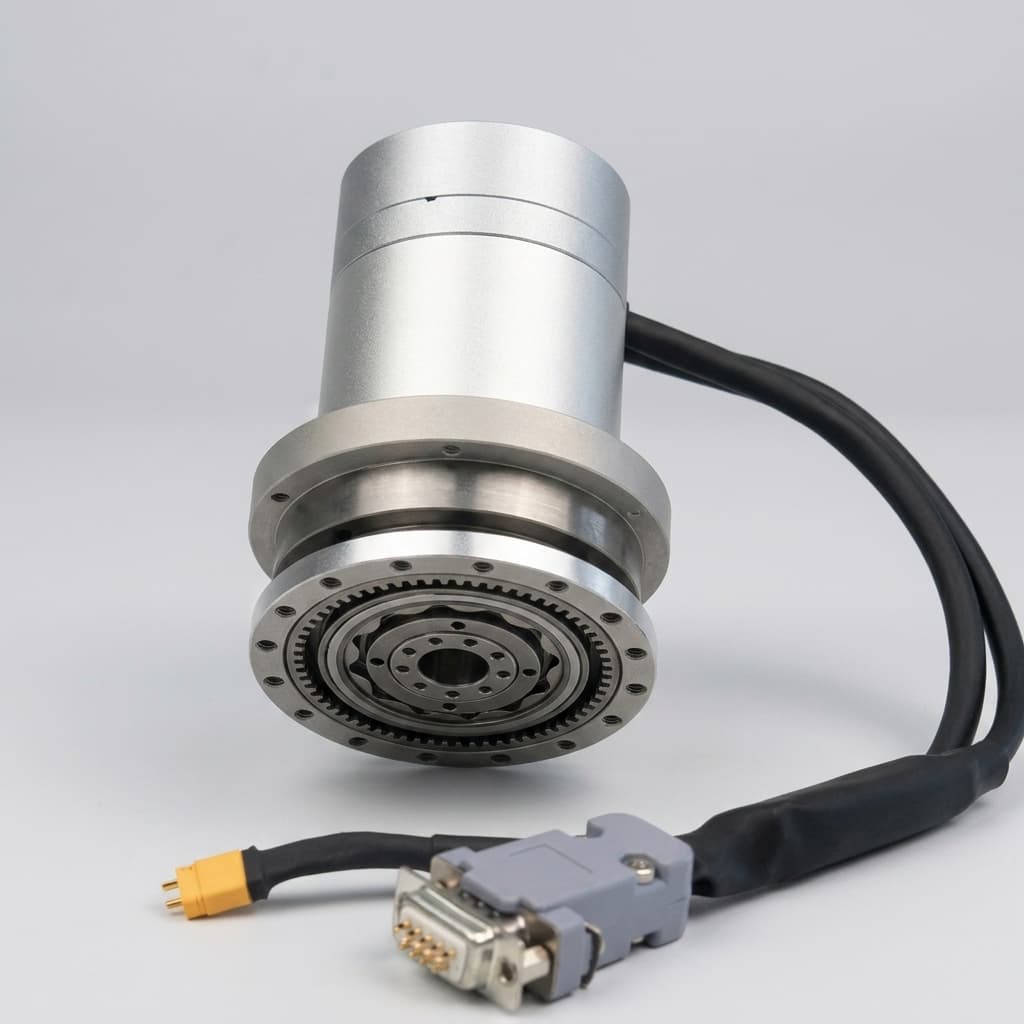
Frameless Motor Integration: Sourcing Guide for Hollow Shaft Servo Drives
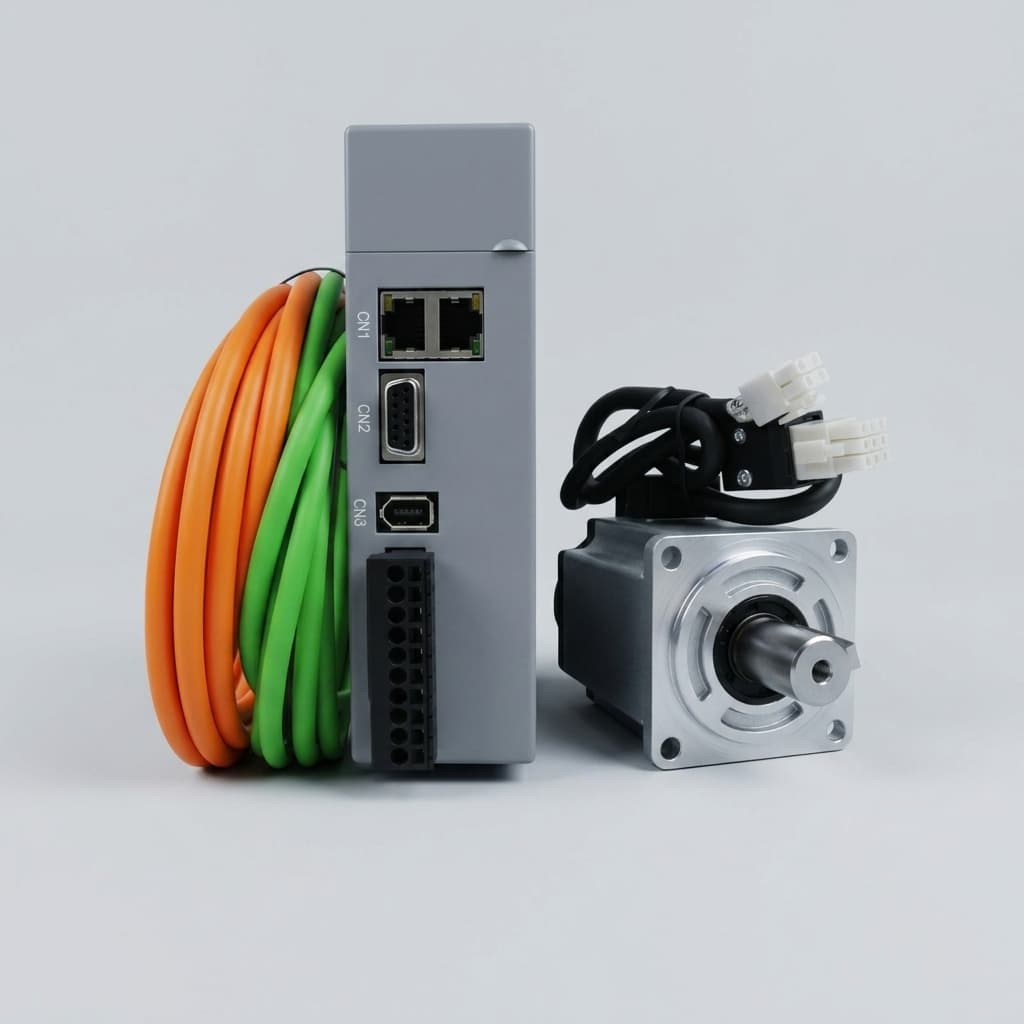
How to Select a 48V EtherCAT Servo Drive for Humanoid Robot Joints
Sourcing Decentralized IP67 GaN Servo Drives: Wiring Cost Reduction and Thermal Trade-offs
Global sourcing guide for decentralized IP67 GaN servo drives, covering wiring cost models, thermal derating limits, RFQ evidence, and OEM sourcing CTAs.