
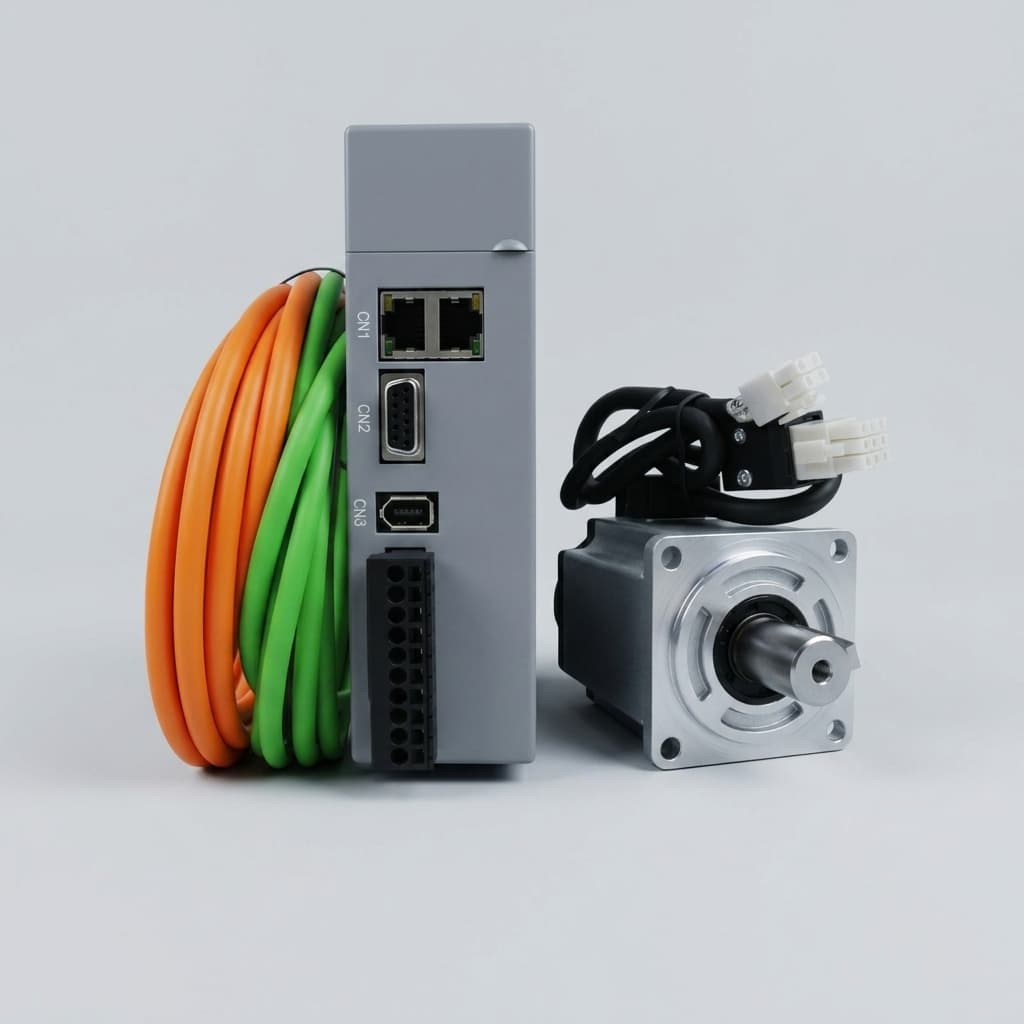
How to Select a 48V EtherCAT Servo Drive for Humanoid Robot Joints
When designing the electronic architecture for a humanoid robot, one of the most critical decisions an OEM must make is selecting the communication protocol between the IPC (Industrial PC) master and the individual joint servo drives.
TL;DR (Executive Summary):
- EtherCAT DC (Distributed Clock) can support microsecond-level synchronization across high-axis-count robots when the master, drive firmware, and topology are validated together.
- CAN FD can be a cost-effective alternative for lower-axis-count or slower distributed networks, but bus load and arbitration must be checked.
- Sourcing check: When evaluating EtherCAT servo drives for frameless joints, confirm controller architecture, dual-port topology, ESI files, and cycle-time evidence for the quoted revision.
The Synchronization Problem in Humanoids
Humanoid robots often use 20 to 50 active degrees of freedom (DoF). Coordinating dozens of distributed 48V servo joints requires a communication protocol designed for deterministic, sub-millisecond synchronization. EtherCAT (Ethernet for Control Automation Technology) is widely used in this role.
However, selecting the right EtherCAT servo drive for a humanoid joint module involves more than just checking a protocol box.
Distributed Clock (DC) Synchronization
The defining feature of a high-performance EtherCAT servo drive is its Distributed Clock (DC) implementation. When a central master controller computes complex kinematics for dynamic walking or balancing, the actuation of the knee, hip, and ankle must stay tightly synchronized within the control system's jitter budget.
Without hardware-level DC support, latency jitter can compromise torque feedforward loops. Ensure the drive you select supports the CiA402 modes your controller needs, such as Cyclic Synchronous Position/Velocity/Torque (CSP/CSV/CST), with Sync0/Sync1 handling verified on your target master.
TwinCAT ESI Configuration (Technical Deep Dive)
For automation engineers integrating these drives into a Beckhoff TwinCAT environment, proper ESI (EtherCAT Slave Information) configuration is critical. Below is a simplified example of PDO (Process Data Object) mapping for a CiA402 Cyclic Synchronous Position (CSP) style setup:
<RxPdo sm="2" fixed="1" mandatory="1">
  <Index>#x1600</Index>
  <Name>CSP RxPDO</Name>
  <Entry>
    <Index>#x6040</Index>
    <SubIndex>0</SubIndex>
    <BitLen>16</BitLen>
    <Name>Controlword</Name>
    <DataType>UINT</DataType>
  </Entry>
  <Entry>
    <Index>#x607A</Index>
    <SubIndex>0</SubIndex>
    <BitLen>32</BitLen>
    <Name>Target Position</Name>
    <DataType>DINT</DataType>
  </Entry>
</RxPdo>
The exact mapping must match the drive firmware and ESI file. A mismatch can prevent the drive from entering the OP (Operational) state when the master enables the DC Sync0 task.
CAN FD vs EtherCAT for Joint Drives
Many OEMs debate whether to use CAN FD or EtherCAT. While CAN FD offers a significant bandwidth upgrade over legacy CAN 2.0A/B, it is still a bus topology where practical update rate depends on payload, arbitration, wiring length, node count, and utilization.
| Feature | CAN FD (5 Mbps) | EtherCAT (100 Mbps) |
|---|---|---|
| Max Nodes (Reliable) | ~8-12 per bus | Up to 65,535 |
| Topology | Bus / Line | Daisy Chain / Ring (Cable Redundancy) |
| Latency Jitter | Load dependent | Master, firmware, and topology dependent |
| Update Rate (10 nodes) | Often around sub-kHz to low-kHz | Often low-kHz when validated on suitable hardware |
| Physical Connector Size | Small (4-pin) | Med (often requires custom ultra-compact headers) |
If you are building a quadruped or humanoid designed to walk or run, EtherCAT is often the safer starting point for synchronized multi-axis control. If you are building an AMR or a slower manipulator where lower update rates are sufficient, CAN FD may remain a practical, cost-effective choice.
Mechanical Integration: Connectors & Form Factor
The hardest part of implementing EtherCAT in a frameless joint isn't the protocol—it's the cabling. Standard RJ45 connectors are unacceptably large for an ankle or elbow joint.
When evaluating a drive, look for:
- Board-to-Wire Headers: Micro-fit headers (like JST GH or Molex PicoBlade) rated for industrial vibration.
- Daisy Chain Support: Dual EtherCAT ports (IN/OUT) directly on the PCB so you don't need external hubs.
- Heat Sinking: Can the drive thermally bond to the outer aluminum casing of the robot joint?
Procurement Guide: Sourcing EtherCAT Servo Drives
From a supply chain perspective, not all EtherCAT drives are created equal. When preparing your RFQ (Request for Quote), OEMs must mandate the following from their electronics manufacturing partner:
- Controller architecture: Ask whether the drive uses a dedicated EtherCAT controller, integrated industrial Ethernet subsystem, or software-oriented implementation. Match this to your compliance and cycle-time requirements.
- Compliance evidence: Ask for EtherCAT Conformance Test Tool (CTT) evidence or pre-compliance notes for the exact firmware revision. Lack of evidence increases integration risk, especially in high-axis-count networks.
- Supply Chain Resiliency: With the semiconductor market still prone to micro-shocks, verify that the supplier has alternative BOM footprints (e.g., dual layout options for the PHY layer chips) to prevent line-down situations.
Conclusion: Unifying Motion and Communication
Choosing the right bus protocol strongly influences the ceiling of your robot's dynamic performance. CAN FD can be a good upgrade for AGVs and moderate-axis-count systems, while highly dynamic bipedal robots usually benefit from EtherCAT DC and careful topology validation.
Next Steps for Hardware Engineers: Are you prototyping a new joint module? Explore our EtherCAT Driver & Encoder Integrated Boards for frameless motors, or read our deep-dive on GaN vs Silicon Drive Architectures to review thermal questions for tight cavities.
Author

Categories
More Posts
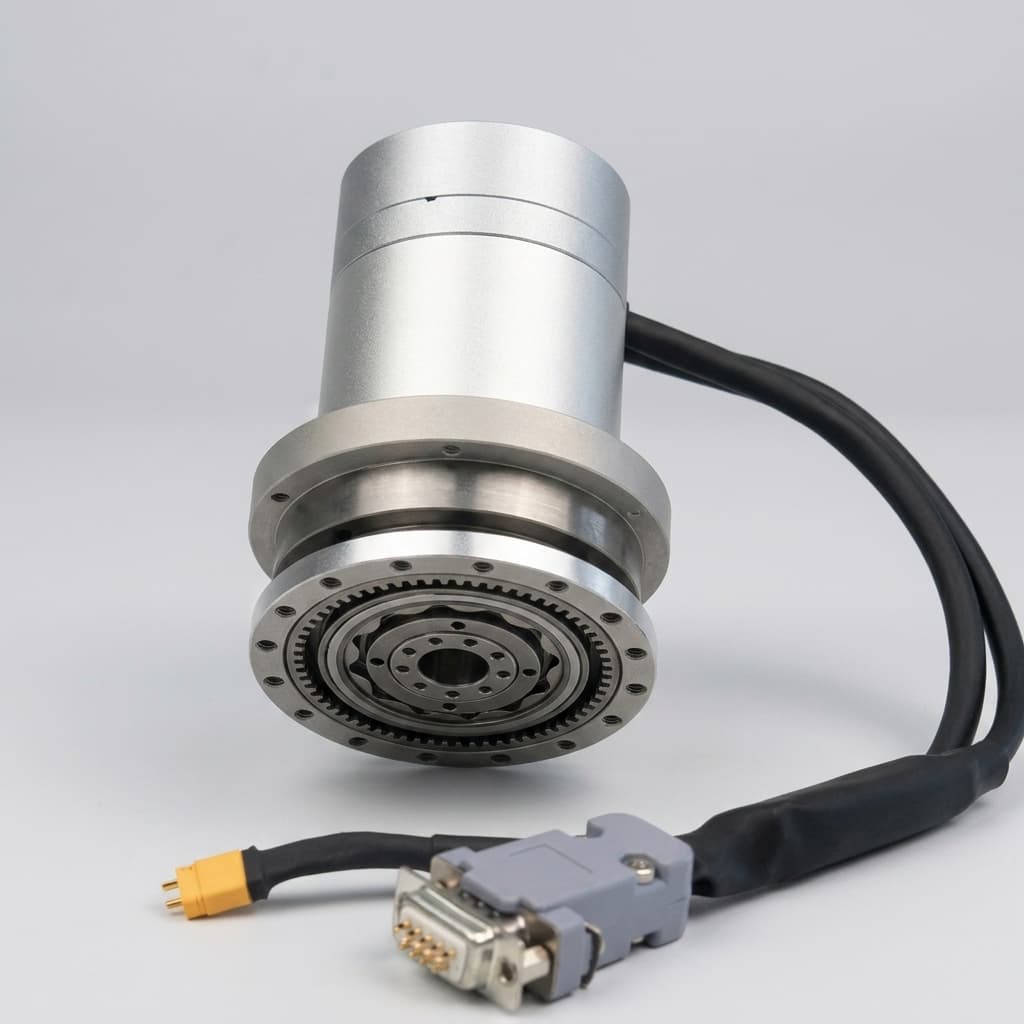
Frameless Motor Integration: Sourcing Guide for Hollow Shaft Servo Drives
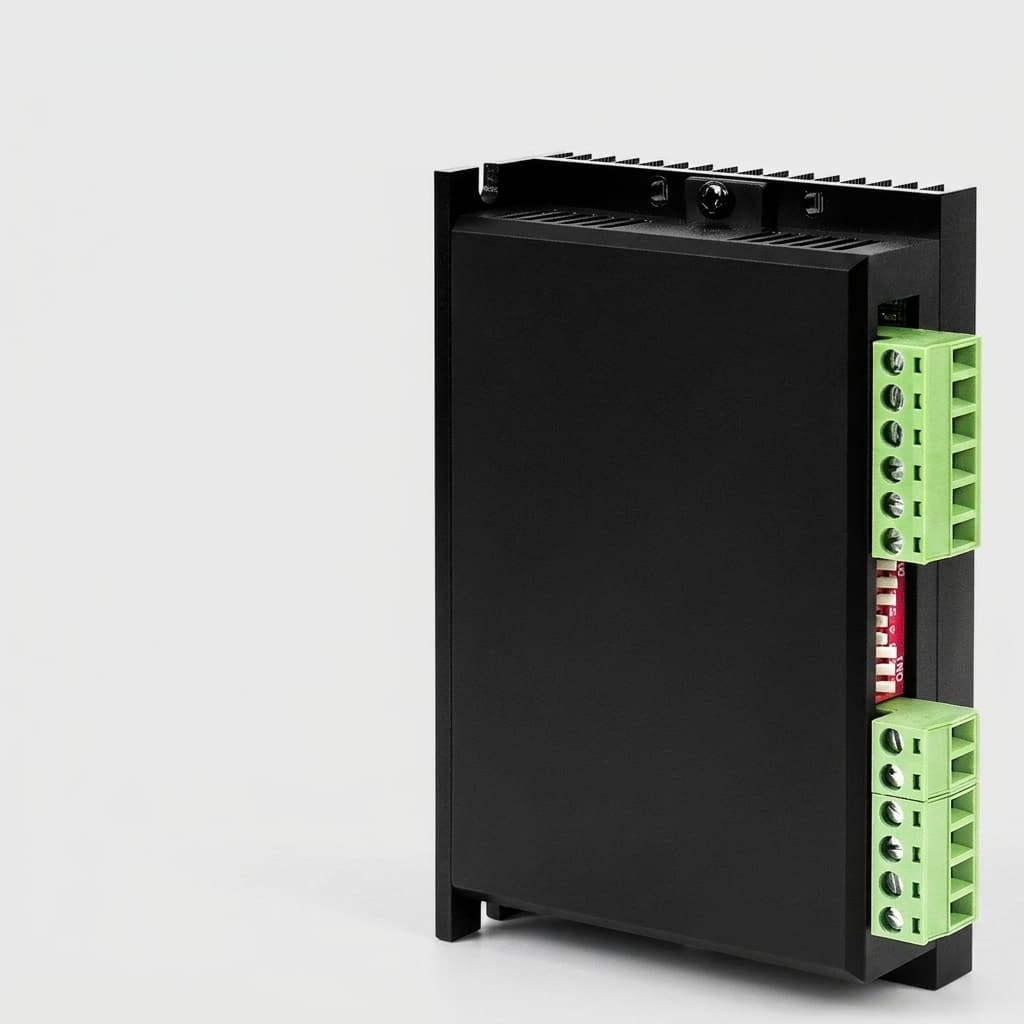
GaN vs Silicon MOSFETs in Low-Voltage Servo Drives: Thermal & Power Density Compared
EMI Mitigation & Compliance for High-Frequency GaN Servo Drives in Robotics
GaN servo drive EMI mitigation guide for robotics: compare dV/dt tuning, filters, shielding, EMC risks, and RFQ checks before sourcing. Request review.